Proven in Orbit
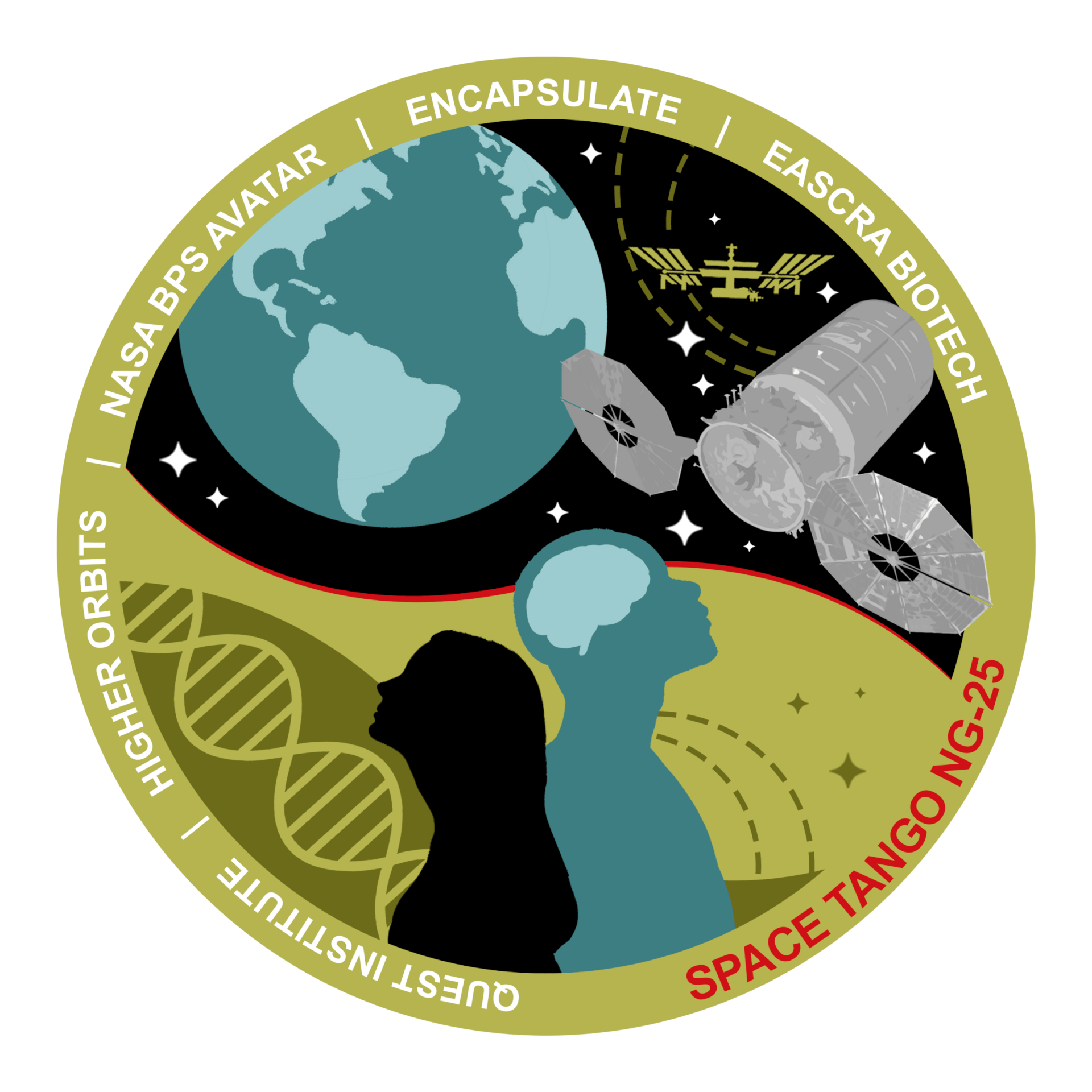
Space Tango has done this before, and NG-25 is the next proof: 330 payloads delivered over 49 missions to date. For this launch, seven partners’ experiments are headed to the ISS; from human brain tissue and artificial retinas to student-designed experiments, NG-25 carries research that could change how we protect astronauts and treat disease on Earth.
Why Microgravity?
On Earth, gravity shapes almost everything about how cells grow, how fluids mix, and how materials form. Remove it, and researchers can see biology and chemistry behave in new ways that are impossible to observe on Earth. In microgravity, cells can organize in more natural three-dimensional forms; proteins and particles stay evenly distributed instead of settling out, and the effects of long-duration spaceflight on the human body can be studied directly. The result is insight that helps keep astronauts healthy on longer missions and improves medicine, manufacturing, and education back home.
Who Is Part of the Launch
Human Health and Disease Models
- ISS-AVATAR-4 (Icahn School of Medicine at Mount Sinai): Validates the functionality of a microfluidic culture system designed to maintain miBrain tissues viable during spaceflight to and from the ISS. A customized microfluidic culture system will be integrated with automated Space Tango flight hardware to maintain the tissue culture media under controlled environmental conditions while collecting longitudinal data on media quality throughout the mission.This investigation could help guide countermeasures that protect astronaut brain health on longer missions. The mini brain platform could also support personalized treatment testing and improve disease models for Alzheimer’s, Parkinson’s, and other neurological disorders affecting patients on Earth.
- Encapsulate: Builds a platform that uses patient-derived microtumors to monitor and predict how cancer metastasizes in microgravity. The biochip operates inside a Space Tango CubeLab, providing temperature and CO₂ control, automated media exchange, sample collection, and more. Metastasis is the main reason cancer becomes life-threatening. A platform that can predict it could help clinicians understand how an individual patient’s cancer is likely to behave and guide more personalized treatment decisions on Earth.
Manufacturing in Space
- Eascra Biotech: Space Tango’s Mambo facility is used with Eascra’s previously developed mixing chip to produce the JBNp particles in an automated manner, reducing the need for manual manipulation by astronauts and allow for the scaling up of production. This work could lead to better drug-delivery materials and a pathway for producing advanced nanomedicines in space for patients on Earth.
STEM Education
-
- Higher Orbits: This student-led research could advance space-based life support, agriculture, and sustainable energy, with Earth applications that include improved biofuel production, new insecticide targets, and better nitrogen-fixing strategies for crops.
- Quest Institute: Flies a student-led NanoLab payload that Quest builds and Space Tango integrates and operates. Flying real experiments gives students hands-on experience with the scientific process in the most unusual laboratory there is, inspiring the next generation of scientists and engineers.
What’s Next
After launch, Space Tango supports each payload during on orbit operations, checking in with the crew throughout the mission. Upon return, we de-integrate and return samples to researchers. We share the imagery, data and publications that show the work performed. From there, partners analyze returned tissues, films and samples – moving research forward in a way that cannot be achieved on Earth.